When you live in Northern Michigan, you spend all winter thinking about the snow. You worry about heavy snow piles weighing down your rafters or thick ice ridges forming along your gutters. But once June rolls around, the weather completely flips. The sun comes out, the humidity rises off Grand Traverse Bay, and your roof faces a whole new set of problems.
Most homeowners around the Traverse City area think summer is a vacation for their roofs. In reality, June, July, and August are some of the harshest months of the year for asphalt shingles. Between intense solar heat baking the roof deck and high humidity triggering the growth of green moss and black streaks, your home’s primary defense system takes a beating.
At MI Roof Pro, we believe in honest, straightforward advice. You don’t need a degree in engineering to understand how to protect your home. This guide breaks down exactly what is happening to your roof during a Northern Michigan summer, answers the most common questions we hear from local property owners, and gives you simple steps to keep your home safe, dry, and cool.
The Black Streaks on Your Shingles Aren’t Dirt
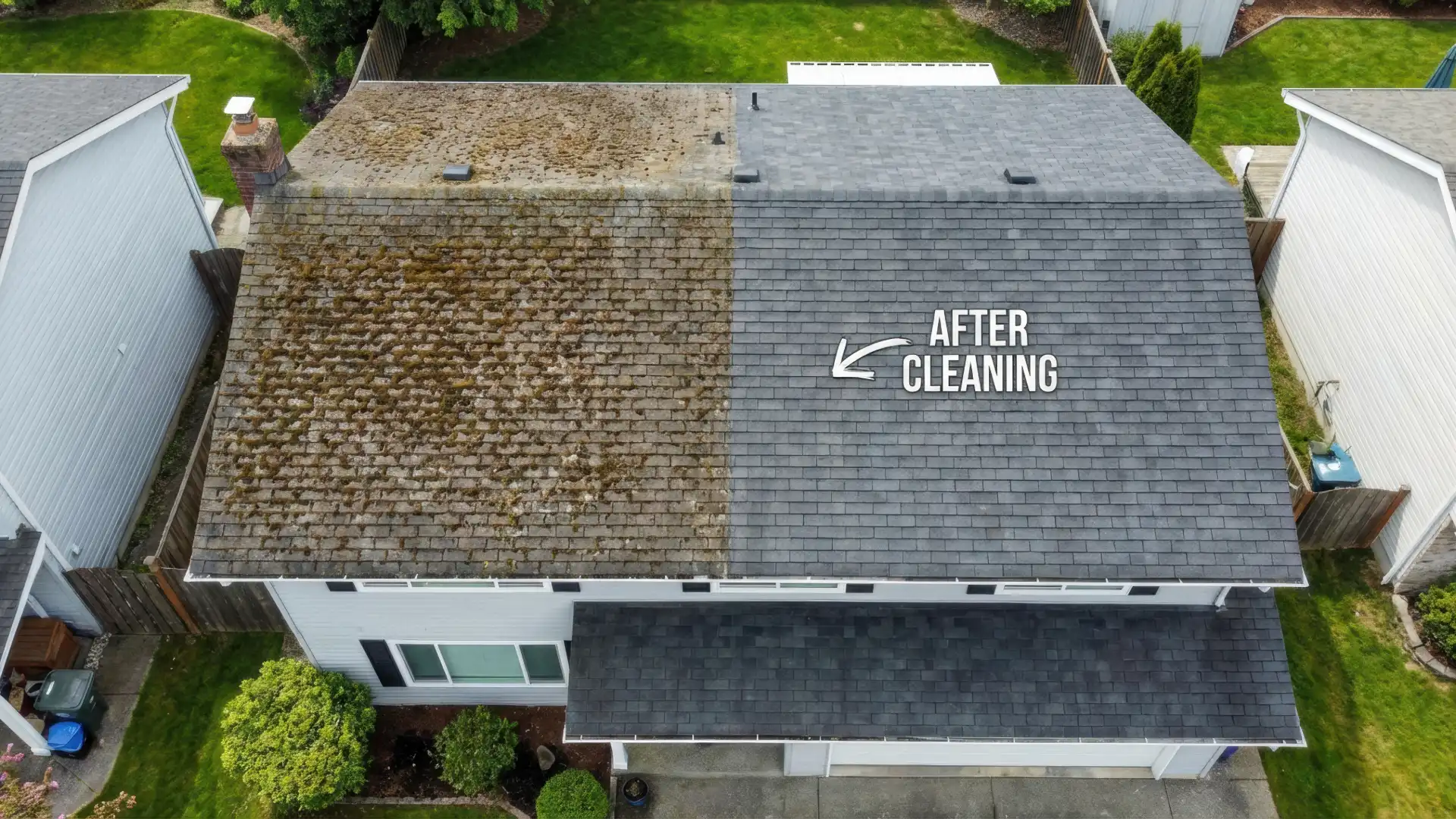
If you take a walk out to your driveway and look up at your roof, you might notice long, dark streaks running down the shingles. Most people assume this is just dirt, soot from a chimney, or shadows from nearby trees.
It isn’t dirt. It is actually a living, breathing organism.
The technical name is Gloeocapsa magma, but most folks just call it blue-green algae. This airborne bacteria loves damp, shaded, and highly humid environments. Because we live right by the water, our local air stays humid throughout the summer. The algae spores land on your roof and spread quickly, especially on the north-facing slopes of your house that do not get direct sunlight to dry them out.
Why Algae is Bad for Your Wallet
The algae isn’t just an eyesore; it is actively eating your roof. Modern asphalt shingles are made with a mix of petroleum and limestone fillers. The limestone gives the shingles weight and helps hold down the protective ceramic granules that shield the roof from the sun.
Guess what blue-green algae loves to eat? Limestone.
As the algae grows and spreads, it feeds on that limestone filler, loosening the protective granules. Once those granules start shedding and washing down your downspouts, your shingles lose their UV defense layer. They become brittle, crack, and fail years ahead of schedule.
The Green Monster: Roof Moss
If you let the algae go unchecked, it often creates the perfect environment for moss to take root. Moss is even more dangerous than algae. It acts like a tiny green sponge, holding rain water directly against your shingles for days or weeks at a time.
When winter returns, that trapped water freezes and expands, physically lifting the edges of your shingles and cracking the seal underneath. Once a shingle loses its sticky thermal seal, the high winds off Lake Michigan can easily rip it right off your house.
The Ultimate Warning: Never Pressure Wash Your Roof
When homeowners realize those black streaks are alive, their first instinct is to rent a pressure washer or hire a cheap handyman to blast the roof clean.
This is the single worst thing you can do to an asphalt shingle roof.
High-pressure water will absolutely remove the black streaks, but it will also blast away millions of the protective ceramic granules we just talked about. Blasting a shingle with high pressure is the equivalent of wearing down 10 years of roof life in ten minutes. Even worse, using a pressure washer on your roof will instantly void your manufacturer’s material warranty. If something goes wrong later, the shingle company will not help you.
How True Experts Clean a Roof
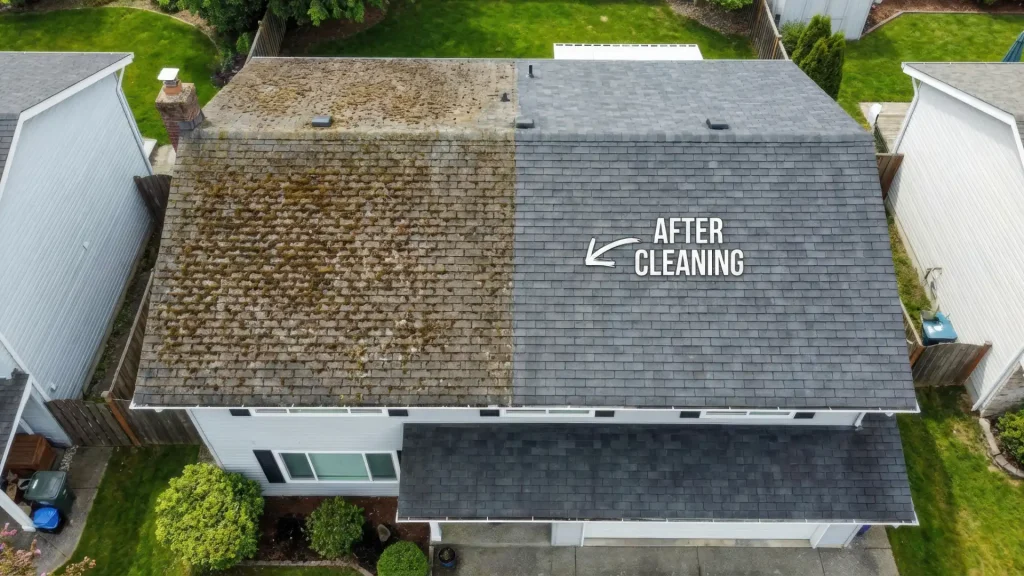
To safely get rid of moss and algae, professional roofing teams use a method called soft washing. This process uses zero high pressure. Instead, we apply a specific, biodegradable chemical solution that gently kills the algae and moss down to the root. Once the organisms are dead, the next few summer rain showers naturally wash them away without disturbing a single protective granule. It keeps your shingle warranty fully intact and stops the structural damage instantly.
Extreme Summer Heat: The Under-Attic Bake
Have you ever walked up to your attic on a July afternoon and felt a wall of stifling, suffocating heat hit you in the face?
When the outside temperature in Traverse City hits 85°F, your dark asphalt shingles absorb that solar radiation. The surface temperature on your roof can easily skyrocket to 150°F.
If your home does not have a properly designed ventilation system, that intense heat gets trapped inside your attic space. It has nowhere to go. This creates a highly destructive phenomenon called “under-attic baking.” The heat trapped inside the attic gets so high that it literally bakes your shingles from the underneath side.
Signs Your Roof is Baking:
- Shingle Blistering: Small, pimple-like bubbles rise up on the surface of the asphalt because the internal oils are boiling.
- Curling and Cupping: The edges of the shingles start to curl upward or cup downward, making them look like potato chips.
- Brittle Texture: The shingles lose their flexibility and snap like a cracker if you touch them.
When shingles curl or blister from extreme heat, they can no longer lay flat. The next time a summer thunderstorm sweeps across the region with high straight-line winds, those curled edges catch the air like a sail and tear away.
The Fix: Dynamic Attic Balance
A roof needs to breathe. Proper ventilation requires a perfect balance of two things: intake and exhaust.
Cool air needs to pull in through your soffits (the underside of your roof eaves), travel up the underside of the roof deck, and carry the hot air out through your ridge vents at the very top peak of your house. If your soffit vents are blocked by old attic insulation, or if your ridge vents are too small, the airflow stops. Part of our standard local roof assessment is checking this balance so your roof stays cool and lasts for decades.
Frequently Asked Questions from Traverse City Homeowners
Q: Can I just install zinc or copper strips to stop the moss?
A: Yes, metal strips do help. When rainwater hits copper or zinc, it releases metallic ions that wash down the roof. These ions are toxic to moss and algae, preventing them from growing. However, these strips only protect the shingles directly below them (usually about 10 to 15 feet down). If you have a massive, complex roof layout, strips alone won’t solve an existing infestation. The roof needs a professional soft wash first, and then metal strips can be added to keep the growth from coming back.
Q: My shingles look faded. Is that a sign of storm damage or just old age?
A: Fading is usually a sign of sun bleaching and granule loss over time. If the fading is patchy or looks like round, dark impact spots, it might actually be hidden hail damage from a recent storm. Hail bruises the shingle, knocking the granules off in specific spots and exposing the black asphalt underneath. If you aren’t sure, it is always best to have a local professional take high-resolution photos so you can see exactly what is causing the discoloration.
Q: How does tree coverage affect my roof life in the summer?
A: Trees are a double-edged sword. Heavy shade keeps your home cooler, which reduces under-attic baking. But trees also drop pine needles, leaves, and seed pods into your roof valleys and gutters. This organic debris holds onto moisture and creates a perfect breeding ground for moss. Plus, overhanging branches give squirrels and raccoons easy access to your roof lines, where they can chew through ventilation caps. We recommend trimming all tree branches back at least 6 to 10 feet away from your roof line.
Simple Summer Maintenance Checklist
You don’t need to climb up on a ladder to keep your roof healthy this summer. In fact, we prefer you stay safely on the ground. Here is a simple checklist you can complete from your yard using a pair of binoculars:
- Check the Valleys: Look at the areas where two roof sections meet to form a “V”. Ensure pine needles and leaves aren’t bunching up there, blocking water flow.
- Inspect the Gutters: Watch your gutters during a heavy summer rain. If water is spilling over the sides instead of flowing out the downspouts, they are clogged and need to be cleared out.
- Look for Shingle Granules: Check the ground directly under your downspout extensions. If you see piles of fine sand that match the color of your shingles, your roof is actively shedding its UV protection layer.
- Scan for Animal Damage: Look closely at your plastic roof vents. If you notice teeth marks or cracked plastic, local pests are trying to find a way into your cool attic space.
Trust True Local Heritage
Your roof is a major financial investment. When you need it inspected, repaired, or replaced, you deserve to work with people who actually know our local climate and building styles.
At MI Roof Pro, we don’t use high-pressure sales tactics or confusing industry jargon. We are proud of our 25-plus years of Northern Michigan carpentry and licensed building heritage. Our dedicated Traverse City Hub serves families right here across Grand Traverse, Leelanau, Benzie, Manistee, Antrim, Kalkaska, and Wexford Counties. We live in these neighborhoods, we deal with the exact same lake-effect weather patterns you do, and we treat every home like it belongs to our own family.
If you are worried about black streaks, think your shingles are curling from the summer heat, or just want an honest, high-integrity assessment of your roof’s current health, we are here to help. Contact our local Traverse City team today to speak with an on-duty roofing professional or to schedule a stress-free, straightforward property evaluation.